

flex PCB manufacturers
As technology evolves, so do the devices that run them. As devices become more compact and feature more advanced functionality, PCB manufacturers must develop new techniques to ensure that the circuitry can be placed within a limited space. As a result, many electronics manufacturers now use rigid-flex and flexible printed circuit boards (FPCs). While most PCBs are flat, FPCs can be curved in order to fit inside of a device’s small form factor.
Flex PCBs can also accommodate various shapes and angles of components, which allows them to accommodate more complex layouts and improve the adaptability of a product. This design flexibility is particularly important for wearables and IoT devices that need to conform to odd-shaped packaging. Nonetheless, a rigid-flex PCB’s performance must still be comparable to that of flat PCBs. To ensure that the rigid-flex PCB’s design is efficient, a thorough DFM check process must be undertaken.
Taking the time to properly analyze the manufacturing process of your flex pcb manufacturer can save you significant costs in the long run. Using the right software is an excellent way to do this. A free-to-use, open-source program called KiCAD is a great choice for a variety of reasons. It offers convenient shortcuts and automation features that can make the entire flex PCB design process a lot less stressful. It’s also highly customizable, making it possible to tailor it to your unique workflow.
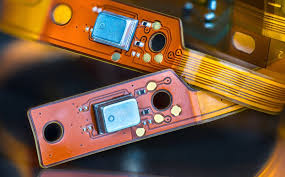
What software do flex PCB manufacturers use?
The process of fabricating a flex PCB is similar to that of a standard PCB, but it uses a different type of copper material. The insulating layers on a flex circuit are typically made from polyimide, like the popular Rogers 4003 or FR4. The photoresist coating is exposed to UV light through a mask, exposing and developing areas of the substrate that will be etched. The exposed copper is then chemically etched away, leaving the desired circuit pattern.
Once the copper has been etched, the surface can be finished by etching off any remaining photoresist and applying solder mask and silkscreen coatings. In addition, a conductive finish may be added to the outer layer of the flex PCB for better electrical conductivity.
Finally, holes in the flex circuit can be through-hole or blind. In the case of through-holes, a silver shield is typically plated onto the hole to protect against electromagnetic interference (EMI). A flex PCB’s final touches may also include edge plating, which can help with handling or soldering.
Once the flex PCB has been finished, it can undergo a rigorous electrical test to ensure that all connections are functioning correctly and there are no shorts or cuts. Once the board has passed inspection, it can be sent to the customer for assembly. To minimize the risk of failure, a trusted flex pcb manufacturer may offer additional services such as adding adhesive tape to certain areas of the board for mounting purposes. The flex PCB manufacturer may also add a protective film to the outer layer to prevent the board from tearing in transit.